+31 (0)43 30 88 400 | office@comex.eu
Compliant digital archiving with WORM storage
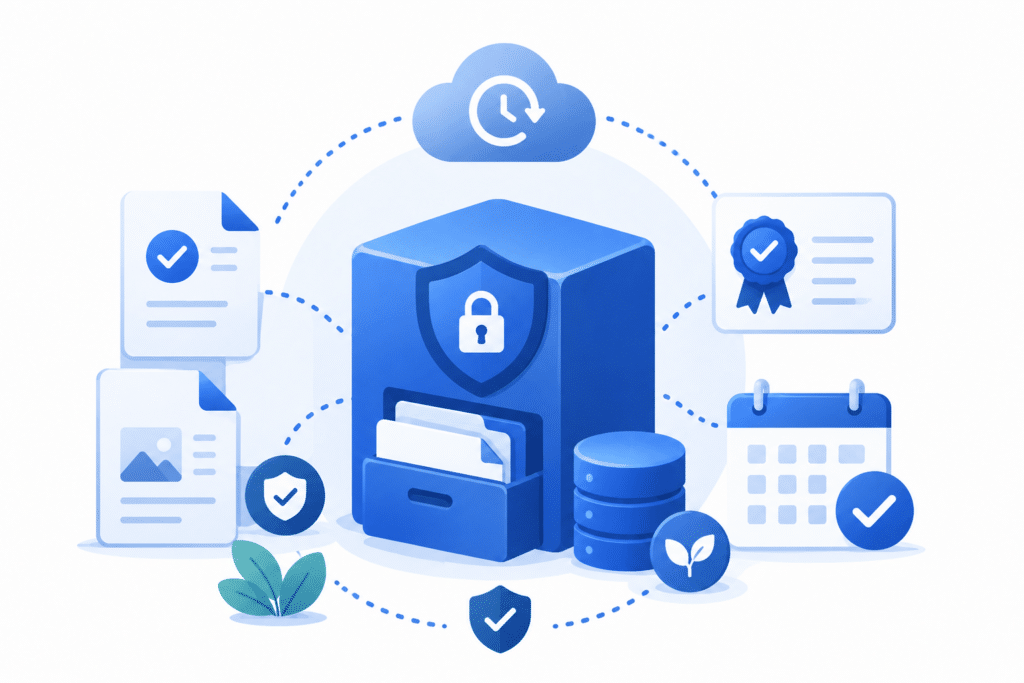
Compliant archiving is not just about keeping data. You must also be able to demonstrate that data remains secure, findable, auditable, and unchangeable throughout the correct retention period.
For organizations with documents, files, images, transaction data, research data, or other critical information, digital archiving is becoming increasingly important. Legislation, audits, internal rules, and cost management require a clear archive strategy.
With WORM storage, retention policies, and suitable archive storage, you maintain control over data that must be kept for a long time but does not need to reside on primary systems daily.
What is compliant archiving?
Compliant archiving means that data is stored according to internal rules, legal retention periods, and audit requirements. It is about more than storage capacity. Data must remain reliable, findable, and auditable.
When it comes to compliant digital archiving, you look at retention periods, access rights, change protection, data integrity, and demonstrability.
For IT teams, it is especially important that archive data cannot be modified or deleted unnoticed. It must also be clear where data is located, who has access, and how long data must be kept.
Why digital archiving is more than just keeping data
Many organizations are storing more and more data. Often, this data remains on primary storage, in file shares, applications, or cloud environments. This may seem easy, but in the long run, it leads to higher costs, less oversight, and more compliance risks.
Digital archiving helps to consciously move data to a storage tier that matches the value and retention period of that data.
Archive data doesn’t always have to be fast. Above all, it must remain secure, reliable, findable, and available for the long term. This requires different storage than active production data or temporary project files.
WORM storage: what does Write Once Read Many mean?
WORM stands for Write Once, Read Many. Data is written once and can then be read many times, but cannot be easily modified or deleted.
WORM storage is relevant when you need to be able to prove that data has not been modified since storage. Think of financial documents, medical records, legal information, research data, camera footage, production documentation, or other data with a mandatory retention period.
Hardware WORM goes further than just software settings. The protection is embedded deeper in the storage layer. This makes it stronger for situations where auditability, integrity, and long-term reliability are important.
Retention policy and mandatory retention
A good retention policy determines which data must be kept, for how long, and when data may be deleted. Without a clear retention policy, data often stays too long or, conversely, not long enough.
What data should you keep?
Not all data has the same retention period. Some data must be available temporarily. Other data must be kept for years due to legislation, contracts, audits, or internal rules.
How long should data be kept?
The retention period depends on the type of data, the sector, and the organization’s obligations. Legal terms apply to some data. For other data, the organization determines for itself how long retention is necessary.
When can data be deleted?
Compliant archiving also means that data is not kept indefinitely without reason. A good retention policy helps to delete data in a controlled manner when the retention period has expired.
Archive storage for compliance, cost, and control
Archive storage has a different role than primary storage. Primary storage is intended for active data needed daily. Archive storage is intended for data that must be kept for a long time but is accessed less frequently.
By moving archive data to suitable archive storage, you prevent primary systems from continuing to grow. This helps with cost control, management, and oversight.
For organizations with a lot of data to be kept for a long time, archive storage is also a way to strengthen digital sovereignty. You maintain better control over where data is located, who can access it, and under what conditions data is preserved.
Backup vs archive: what is the difference?
Backup and archive are often confused, but they serve different functions.
A backup is intended for recovery. You use a backup when data is lost, damaged, or encrypted.
An archive is intended for preservation. You use an archive to keep data available for the long term in an auditable and reliable way.
For compliant archiving, a regular backup is therefore not enough. Archive data requires retention, integrity, findability, and protection against modification or deletion.
When do you need WORM storage?
WORM storage is especially relevant when data must remain demonstrably unchangeable.
Think of situations where:
- data is subject to a legal retention obligation
- auditors must be able to verify that data has not been modified
- documents or files must remain available for years
- archive data must be protected against deletion
- compliance and data integrity are important
- primary storage becomes too expensive for data that needs to be kept for a long time
- you want to keep archive data under your own control
Not every dataset requires WORM storage. For temporary or easily reproducible data, it is often not necessary. For critical archive data, it can make the difference.
How Silent Cubes help with compliant archiving
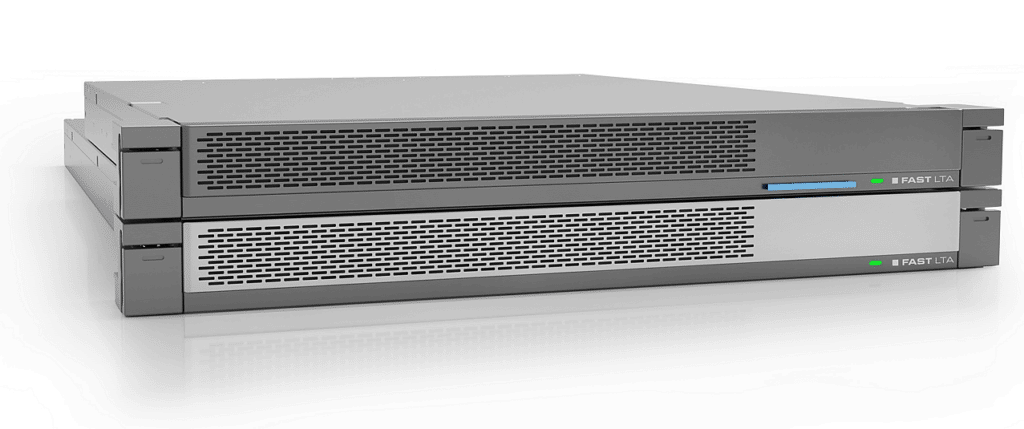
Silent Cubes were developed for organizations that want to store data securely and in a demonstrably unchangeable way for the long term.
The solution uses hardware WORM storage, digital auditing, and protection against modification or deletion. This makes Silent Cubes suitable for environments where archive data must remain reliable, auditable, and available for the long term.
Silent Cubes are suitable for compliant digital archiving, long-term archive storage, and data that must not be lost. Think of documents, files, images, research data, and other information with a long retention period.
Compliant archiving within NIS2, DORA, and digital sovereignty
Compliant archiving touches on several themes. Within NIS2, it’s about cyber resilience, continuity, and demonstrability. Within DORA, it’s about digital resilience, recoverability, and control over ICT risks.
Also digital sovereignty plays a role. You want to know where archive data is located, who has access, which legislation applies to the data, and how dependent you are on external cloud platforms.
With European storage for compliant archiving, you keep critical archive data under better control. This helps with compliance, cost control, and long-term availability.
Frequently asked questions about compliant archiving
What is compliant archiving?
Compliant archiving means that data is stored according to legal requirements, internal rules, and audit obligations. Data must remain secure, findable, auditable, and reliably available throughout the correct retention period.
What is WORM storage?
WORM storage stands for Write Once, Read Many. Data is stored once and cannot then be easily modified or deleted. This helps to store archive data in a demonstrably unchangeable way.
What is the difference between backup and archive?
A backup is intended to recover data after loss, damage, or ransomware. An archive is intended to store data for the long term in an auditable and reliable way. For compliant archiving, a regular backup is therefore not enough.
Why is a retention policy important?
A retention policy determines which data must be kept, for how long, and when data may be deleted. Without a retention policy, data often stays too long or is not managed in a sufficiently demonstrable way.
When do you need WORM storage?
WORM storage is relevant when data must not be modified or deleted during a retention period. This is important for audits, legal retention obligations, legal data, medical records, financial documents, and other critical archive data.
How does European storage help with compliant archiving?
European storage helps organizations maintain more control over where archive data is located, who has access, and how data is managed. Because design, development, service, and support are organized within Europe, you maintain more grip on compliance, continuity, and dependence on non-European technology platforms.
How do Silent Cubes help with compliant archiving?
Silent Cubes offer hardware WORM storage for long-term archiving. The solution helps organizations store data securely, auditably, and in a demonstrably unchangeable way.
Discuss your archive strategy
Do you want to know which data you should archive and which storage tier fits your compliance requirements?
Schedule a meeting with one of our experts. We will look at archive storage, WORM storage, retention policy, data retention, and long-term availability.
 Subscribe for tips and info