+31 (0)43 30 88 400 | office@comex.eu
Silent AI ES: Local AI search for your corporate knowledge
Silent AI ES is a local Enterprise Search solution that allows employees to ask questions of internal documents, knowledge bases, and corporate systems.
The solution runs entirely within your own environment. Data, questions, and answers do not leave the organization. Silent AI ES searches different information sources simultaneously and provides a clear answer with references to the documents used.
7%
Only 7% of organizations are truly AI-ready.
Find out where your organization stands in just 4 minutes.
Source: Veeam, Data & AI Trust Gap Report 2026
What is Silent AI ES?
Silent AI ES makes scattered corporate knowledge accessible via a simple chat interface. Instead of searching for individual keywords, employees ask a question in plain language. Silent AI ES understands the content and context of that question and searches for relevant information within the connected data sources.
The solution can access information from SharePoint, Confluence, Exchange, Nextcloud, SMB storage, PDF files, and internal web pages, among others. The answer is compiled based on these verified sources and includes references to the original documents.
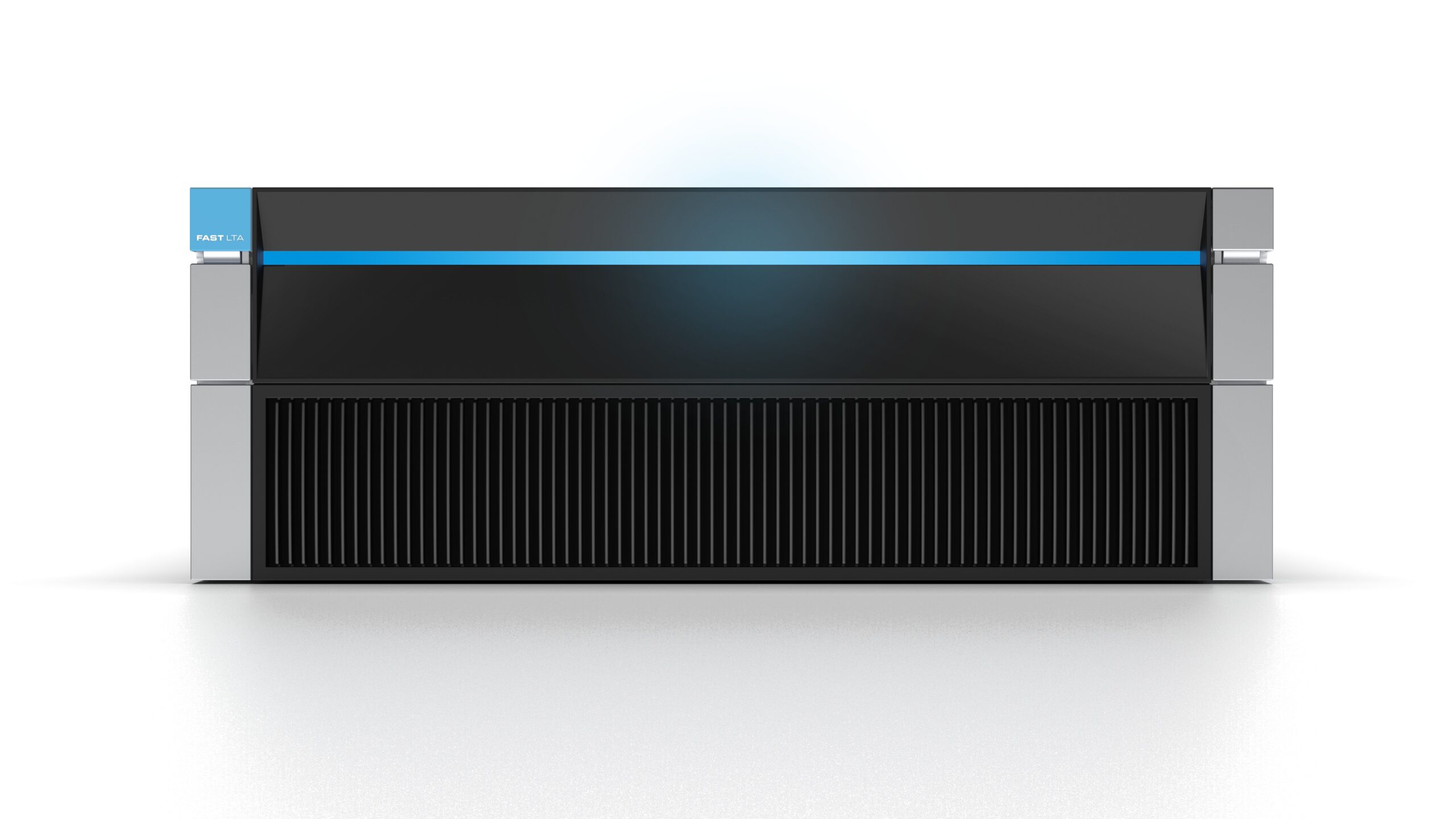
Silent AI ES runs on its own appliance within your infrastructure. The language model, vector database, connectors, and rights management come together in one managed solution. This allows you to use AI for Enterprise Search without sending corporate data to a public cloud service.
With FAST LTA CARE, the appliance remains secure and supported. Fixed license and maintenance costs ensure predictable expenses, without billing per token, question, or user.
Why AI search for corporate knowledge?
Important information is often scattered across different systems. Employees search in SharePoint, intranet, file servers, ticket systems, and knowledge bases, while the correct information may also be stored under different terms.
Traditional search functions primarily return documents and search results. Silent AI ES provides a concrete answer based on the content and context of the connected sources. As a result, employees need to search fewer systems and documents individually.
The key benefits
- Semantic search based on content and context, not just keywords.
- A single answer based on multiple internal information sources.
- Direct references to the documents on which the answer is based.
- Fully on-premises, without transferring data to public cloud environments or third countries.
- Existing roles and access rights remain governing.
- Fixed costs without token limits or variable costs per question.
- German technology with local support in the Benelux.
- Developed for organizations that want to maintain control over data, privacy, and compliance.
Local, private, and auditable
The core principles of Silent AI ES
100% on-premises
Silent AI ES runs entirely within your own infrastructure. Documents, prompts, and answers remain local. No public cloud service is required to answer questions.
Existing rights remain governing
Silent AI ES connects to existing identity providers and access structures. Support is available for LDAP and Active Directory, OIDC and SSO, Entra ID, Okta, and Google Workspace, among others.
Rights from connected source systems are also adopted and automatically updated. An employee only sees information to which they already have access.
Answers with source attribution
Silent AI ES uses Retrieval Augmented Generation (RAG). The language model bases every answer on information from predetermined corporate sources, rather than exclusively on general knowledge from the language model.
Every answer contains references to the sources used and links to the original documents. This allows employees to verify where the information comes from. This limits hallucinations and makes answers usable for applications where reliability and traceability are important.
Privacy by design
Silent AI ES combines rights management with end-to-end encryption and an incognito mode. Administrators can manage the system but do not automatically have access to user questions. Logins, logouts, and changes in rights can be centrally recorded and audited.
No token limits
Usage is not billed per prompt, token, or answer. You work with fixed license and maintenance costs. As a result, costs remain predictable as more employees start using the solution.
Enterprise Search in practice
Research and development
Make research reports, patents, test results, and technical documentation collectively searchable. Silent AI ES also recognizes contextual connections when different terms or synonyms are used.
Service and support
Allow service employees to search through historical tickets, maintenance reports, manuals, and knowledge bases. They receive an answer with a direct reference to the original ticket system or document.
Legal information and contracts
Search by meaning within contracts, agreements, policy documents, and legal documents. Source attribution allows for verification of every answer.
Compliance and internal audits
Find policies, evidence, and procedures without manually searching through different systems. The reference to the source used supports a verifiable chain of information.
Government and public services
Make files, cases, decisions, and previous situations accessible via questions in plain language. Sensitive information remains within the own infrastructure and existing access rights continue to apply.
Internal knowledge management
Connect SharePoint, Confluence, file servers, and intranet, for example. Employees get one answer to questions about procedures, IT guidelines, HR policy, and other internal topics.
How does Silent AI ES work?
Silent AI ES connects the chosen data sources with a local search and AI architecture.
- Connectors retrieve information, metadata, and access rights from the connected sources.
- Documents are processed via OCR and semantic vectorization, among other methods.
- The search technology selects the information that contextually matches the question.
- The local language model formulates an answer based exclusively on this information.
- The user receives the answer with references to the original sources.
Data sources can be updated incrementally. This means the entire information collection does not need to be reprocessed with every change.
Made in Europe
Silent AI ES was developed by FAST LTA in Germany and is delivered as an integrated appliance with hardware, software, and support. The solution is designed for organizations that want to deploy AI within the frameworks of the GDPR, the EU AI Act, and their own information security policies.
FAST LTA CARE provides maintenance and support with fixed terms and a possible duration of 3 to 5 years.
Discover what Silent AI ES can do for your organization
During a demo, we show how Silent AI ES searches different data sources, respects access rights, and provides answers with verifiable source references.
Your personal demo.
Schedule a demo with our experts and experience it for yourself.Frequently asked questions about Silent AI ES
What is the difference between Silent AI ES and ChatGPT Enterprise?
Silent AI ES runs on its own appliance within your infrastructure and does not require a public cloud service to answer questions. Documents, questions, and answers remain within the organization.
The solution is directly connected to your data sources and adopts existing access rights. Employees only receive answers based on information to which they already have access.
What is the difference between Silent AI ES and Silent AI Pro?
Silent AI ES is focused on Enterprise Search. Employees ask questions of internal documents, knowledge bases, and corporate systems and receive answers with source attribution.
Silent AI Pro is a broader local AI workspace. In addition to knowledge retrieval, it also supports projects, skills, AI agents, and the creation of new content and documents.
Which data sources can Silent AI ES search?
Silent AI ES can access information from SharePoint, Confluence, Exchange, Nextcloud, SMB storage, PDF files, and internal web pages, among others.
Connectors also retrieve metadata and existing access rights. Additional connectors are available upon request.
How does Silent AI ES prevent incorrect answers?
Silent AI ES uses Retrieval Augmented Generation (RAG). The local language model formulates an answer based on relevant information from predetermined corporate sources.
Every answer contains references and links to the documents used. This allows the user to verify the information directly and significantly limits the risk of hallucinations.
Does our data remain completely local?
Yes. Silent AI ES runs entirely on-premises. Documents, prompts, and answers do not leave the appliance and are not sent to a public AI service or a third country.
Does Silent AI ES respect existing access rights?
Yes. Silent AI ES connects to existing identity providers and source systems. Support is available for LDAP and Active Directory, OIDC and SSO, Entra ID, Okta, and Google Workspace, among others.
Rights from connected systems are automatically adopted and updated. Users only see information for which they are already authorized.
Can administrators view user questions?
Managing the appliance does not automatically give an administrator access to user questions. Silent AI ES separates system administration from access to user questions and supports an incognito mode.
How does Silent AI ES differ from a traditional search function?
A traditional search function primarily searches for exact words and returns a list of documents. Silent AI ES searches semantically and looks at the meaning and context of a question.
The solution can search multiple sources simultaneously and formulates a direct answer from them with references to the original documents.
Does the language model need to be trained with our corporate data?
No. Silent AI ES uses RAG to make relevant information available to the language model at the time of the question. The corporate data is not used to retrain the language model.
This keeps the data and the language model separate. As a result, the language model used can also be replaced without rebuilding the connected corporate knowledge.
Is Silent AI ES billed per token or per question?
No. Silent AI ES has no token-based billing or variable costs per question. You work with fixed license and maintenance costs, so costs remain predictable as usage grows.
For which organizations is Silent AI ES suitable?
Silent AI ES is suitable for organizations with a lot of scattered or sensitive corporate knowledge. This includes governments, healthcare institutions, financial organizations, industry, research departments, legal teams, compliance functions, and service organizations.
The solution is particularly relevant when data is not allowed to be sent to public AI services or when verifiable source attribution is required.
Can Silent AI ES be integrated into existing software?
Silent AI ES connects existing data sources via connectors. This allows employees to consult information from multiple systems via a single AI search environment.
For specific integrations and additional connectors, FAST LTA and Comex will determine what connection is required for the application.
Can Silent AI ES generate or analyze images?
Silent AI ES was developed for Enterprise Search and text-based knowledge retrieval. The solution can process documents and uses OCR and image descriptions, among other things, to make information findable, but it is not intended as a general solution for generating images.
Does Silent AI ES comply with the GDPR and the EU AI Act?
Silent AI ES was developed with privacy and European regulations as a starting point. The solution keeps data local, adopts existing access rights, and supports verifiable answers with source attribution.
Whether a specific application fully meets all legal requirements also depends on the setup, the data sources used, and the organization’s policy. This responsibility, therefore, does not rest solely with the technology.
 Subscribe for tips and info