+31 (0)43 30 88 400 | office@comex.eu

Off-cloud AI for sensitive business data
Generative AI offers many opportunities, but also raises questions. Which business data are you allowed to use? Where is that data processed? Who has access to the output? And how do you prevent sensitive information from ending up in public AI services?
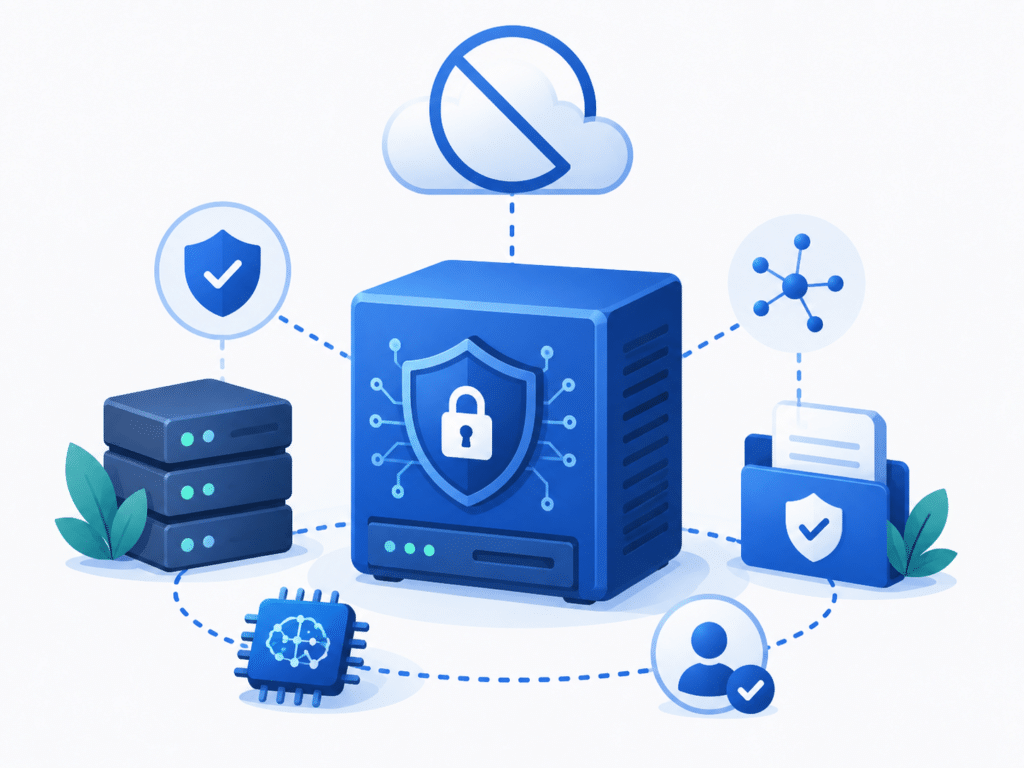
Off-cloud AI helps organizations use AI with their own documents, knowledge bases, and internal systems, without sending sensitive business data to public cloud environments.
For IT teams, it’s about control over data, permissions, costs, and compliance. Especially when AI is applied to customer information, files, contracts, technical documentation, support data, or other sensitive corporate knowledge.
What is off-cloud AI?
Off-cloud AI means that AI processing does not take place in a public cloud environment, but within a controlled environment of the organization itself. This can be local, on-premise, or in a private infrastructure.
The goal is that sensitive business data does not have to be sent to external AI platforms. As a result, organizations maintain more control over where data is located, who has access, and how AI is used.
Off-cloud AI is often linked to terms such as private AI, sovereign AI, on-premise AI, AI appliance, and private LLM.
Why public AI services are not always suitable
Public AI services can be useful for general tasks. Think of text suggestions, summaries, or brainstorms. For sensitive business data, it’s a different story.
When employees use internal documents, customer data, or confidential information in public AI tools, risks arise regarding privacy, compliance, access management, and data control.
Costs can also become less predictable. With some AI services, you pay per user, per query, per token, or per consumption. For organizations that want to deploy AI broadly, this can become difficult to manage.
That is why more and more organizations are looking for private AI or off-cloud AI solutions.
Private AI, sovereign AI, and on-premise AI: what is the difference?
Private AI
Private AI focuses on AI use within a shielded environment. The organization maintains more control over data, access, and processing.
Sovereign AI
Sovereign AI focuses on digital sovereignty. It is about control over data, infrastructure, jurisdiction, vendor lock-in, and support.
On-premise AI
On-premise AI runs locally within the organization’s own environment. Data does not need to be sent to a public cloud environment.
These concepts overlap, but each has a different emphasis. For organizations with sensitive data, the combination is especially important: using AI with their own data, within a controlled environment, and with clear agreements on access, costs, and management.
Off-cloud AI vs public AI services
Public AI services
Public AI services are suitable for general applications, but less suitable when sensitive business data, internal documents, or regulated information are used.
Key points of attention:
- Where is data processed?
- Is input stored?
- Who has access to data?
- How does permissions management work?
- Are costs predictable?
- Does it fit within compliance requirements?
Off-cloud AI
Off-cloud AI is designed for organizations that want to use AI with their own data, but want to maintain control over processing, access, and infrastructure.
Key benefits:
- Data remains within the own environment
- Existing permissions management remains leading
- More control over compliance
- Less dependency on public AI platforms
- Fixed costs more feasible
- Suitable for sensitive business data
Why off-cloud AI is important for sensitive business data
Many organizations have large amounts of knowledge that are difficult to find. Think of policy documents, technical manuals, contracts, tickets, intranet pages, project documentation, research data, or customer files.
Generative AI can help make that knowledge available faster. But precisely that data should not just end up in public AI tools.
Off-cloud AI makes it possible to use AI on your own data sources, while sensitive information remains within your own environment. In this way, AI becomes not just a productivity tool, but also a part of a secure data architecture.
Private LLM and RAG with own business data
A private LLM is a language model used within a controlled environment. The model can be used for questions, summaries, searches, or support for internal processes.
In many organizations, this is combined with RAG. RAG stands for Retrieval Augmented Generation. In this process, the AI first searches for relevant information in its own documents or knowledge sources and uses that information to formulate an answer.
The advantage is that employees get answers based on internal knowledge, without all data having to be retrained into a model.
For organizations, it is especially important that permissions management continues to work correctly. An employee should only receive information that they are authorized to access.
For which applications is off-cloud AI suitable?
Off-cloud AI is particularly interesting when AI is used with internal knowledge or sensitive data.
Think of:
- knowledge management
- internal search queries
- support and service desk
- legal documents
- technical documentation
- policy information
- project documentation
- software development
- contract analysis
- document classification
- questions about internal procedures
Most organizations don’t start with complex AI projects. They start with one clear use case, such as searching internal documents or supporting employees with answers from existing knowledge sources. From there, the use cases are slowly expanded and fine-tuned.
Off-cloud AI and digital sovereignty
Off-cloud AI aligns strongly with digital sovereignty. Organizations want to know where data is located, who has access, which legislation applies to the data, and how dependent they are on external platforms.
With AI, this question becomes even more important. AI often works with large amounts of data, prompts, context, and output. When this runs through public cloud environments, control can become more difficult.
With European storage and off-cloud AI, you maintain more grip on business data, infrastructure, support, and costs. This helps organizations deploy AI safely without losing control over sensitive data.
How Silent AI helps with off-cloud, sovereign AI
Silent AI was developed for organizations that want to use generative AI with their own data, without sending sensitive information to public AI services.
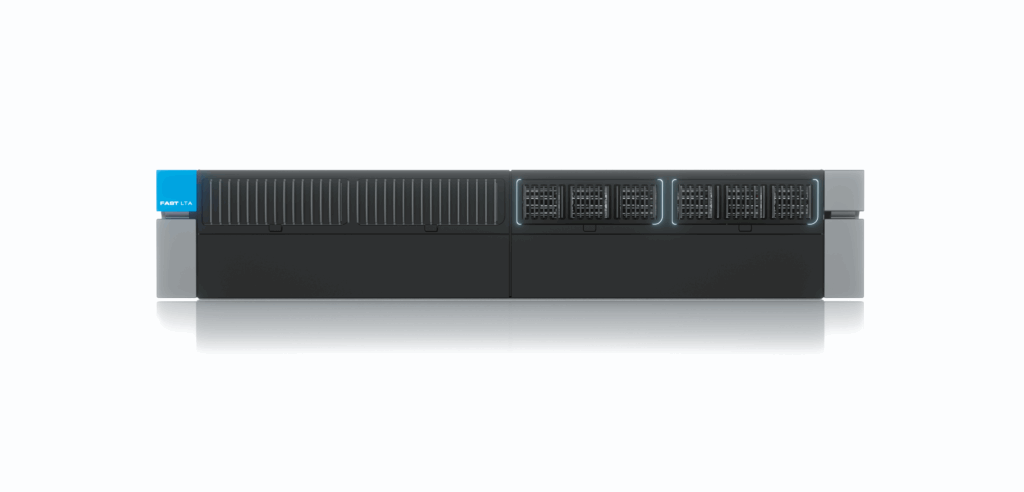
The solution runs locally, works with its own data sources, and takes existing permissions management into account. Employees can ask questions of internal documents, knowledge bases, and other text sources, while data remains within the own environment.
Silent AI combines local AI, private LLM, RAG, secure storage, and management in one appliance. This makes the solution suitable for organizations that want to deploy AI for sensitive business data, compliance, and digital sovereignty.
When should you consider off-cloud AI?
Off-cloud AI is relevant when:
- employees want to use sensitive data with AI
- public AI services do not fit compliance requirements
- you want to maintain control over where data is processed
- existing permissions management must remain leading
- costs must be predictable
- AI becomes part of internal processes
- digital sovereignty is important
- you want to use AI with documents, knowledge bases, or internal systems
Frequently asked questions about off-cloud AI
What is off-cloud AI?
Off-cloud AI means that AI processing does not take place in a public cloud environment, but within a controlled environment of the organization itself. This keeps sensitive business data better under its own control.
What is private AI?
Private AI is AI used within a shielded environment. The organization maintains more control over data, access, processing, and compliance than with public AI services.
What is sovereign AI?
Sovereign AI focuses on digital sovereignty in AI. It is about control over data, infrastructure, jurisdiction, vendor lock-in, service, and support.
What is a private LLM?
A private LLM is a language model used within a controlled environment. This helps organizations apply AI to their own data without sending sensitive information to public AI platforms.
What is the difference between off-cloud AI and on-premise AI?
On-premise AI runs locally within the own environment. Off-cloud AI is broader and means that AI processing takes place outside public cloud environments. On-premise AI is therefore a form of off-cloud AI.
Why is off-cloud AI important for sensitive business data?
Off-cloud AI helps prevent sensitive business data from ending up in public AI services. Organizations maintain more control over data, permissions, processing, costs, and compliance.
How does off-cloud AI help with digital sovereignty?
Off-cloud AI helps organizations maintain control over where data is processed, who has access, and how dependent they are on external AI platforms. In combination with European storage, this supports broader digital sovereignty.
How does Silent AI help with off-cloud AI?
Silent AI is a local AI appliance for organizations that want to use generative AI with their own data. The solution runs locally, uses private LLM and RAG, and takes existing permissions management into account.
Discuss your off-cloud AI strategy
Do you want to use generative AI with your own data, without losing control over sensitive business information?
Schedule a meeting with one of our experts. We will look at off-cloud AI, private AI, permissions management, RAG, private LLM, and the role of Silent AI within your organization.
 Subscribe for tips and info