+31 (0)43 30 88 400 | office@comex.eu

Cloud, local, or hybrid for AI?

Cloud First is a logical architectural principle for many organizations. But does this mean that every AI application automatically belongs in the cloud?
Not every AI workload has the same requirements. Data sensitivity, required availability, integrations, and costs vary per application. Therefore, the choice between cloud AI, local AI, and hybrid AI is not a matter of a single fixed strategy. An assessment per workload works better.
Five questions when choosing AI infrastructure
1. How sensitive is the data?
Start with the data. Does the AI application contain personal data, financial data, research data, or other confidential information?
Next, determine whether that data is allowed to leave the organization or region and which contractual and legal requirements apply. The location of processing, storage, and potential access by third parties also plays a role here.
For organizations that want to maintain control over their data, local AI processing can be a suitable solution.
2. How are access rights managed?
Must the AI application take into account existing rights per department, project, or role?
An AI search function that makes information from HR, finance, and the service desk searchable must not bypass existing access rights. Employees should only be able to consult information for which they are authorized.
Identity management and authorization must therefore be part of the AI architecture from the start.
3. How important is availability?
Must the AI application continue to function when the internet connection or an external cloud service is unavailable?
For an occasional writing task, an interruption is often acceptable. This may be different for operational processes.
Local AI can reduce dependence on external services and offers organizations more control over the availability of their AI infrastructure.
4. How flexible must the AI architecture be?
The AI market is developing rapidly. New models, applications, and integrations follow each other in quick succession.
An architecture in which data, models, and applications are strongly intertwined can make future adjustments complex and costly.
Open interfaces and a clear separation between these components help to remain flexible. This allows organizations to deploy new AI models and tools without having to redesign their entire infrastructure.
5. What are the total costs of AI?
Do not only assess the purchase costs or licenses, but look at the Total Cost of Ownership (TCO).
Consider implementation, management, support, energy consumption, integrations, and future growth.
Particularly with intensive AI use, costs can vary significantly. Agentic AI workflows, for example, perform multiple model steps to complete a single task. With cloud-based models that charge per token, this can considerably increase consumption and thus costs.
Local AI usually requires an investment in infrastructure, but can be financially attractive for structural and intensive use because variable token costs are eliminated.
When do you choose cloud, local, or hybrid AI?
There is no universally correct choice. The best AI infrastructure depends on the application and the requirements of the organization.
Cloud AI is well-suited for rapid experiments, varying usage, and applications with non-sensitive data. Organizations benefit from access to external models without managing the full infrastructure themselves.
Local AI (on-premises AI) is interesting for organizations that work with confidential data, have high requirements for data control, or want to be less dependent on external services. Data and AI processing remain within their own infrastructure.
Hybrid AI combines both approaches. Sensitive data sources and business-critical processes remain local, while external AI models are deployed for applications where this is permitted and offers functional advantages.
This allows organizations to leverage the benefits of cloud AI without accepting the same dependencies and risks for every application.
Silent AI Pro as part of a hybrid AI strategy

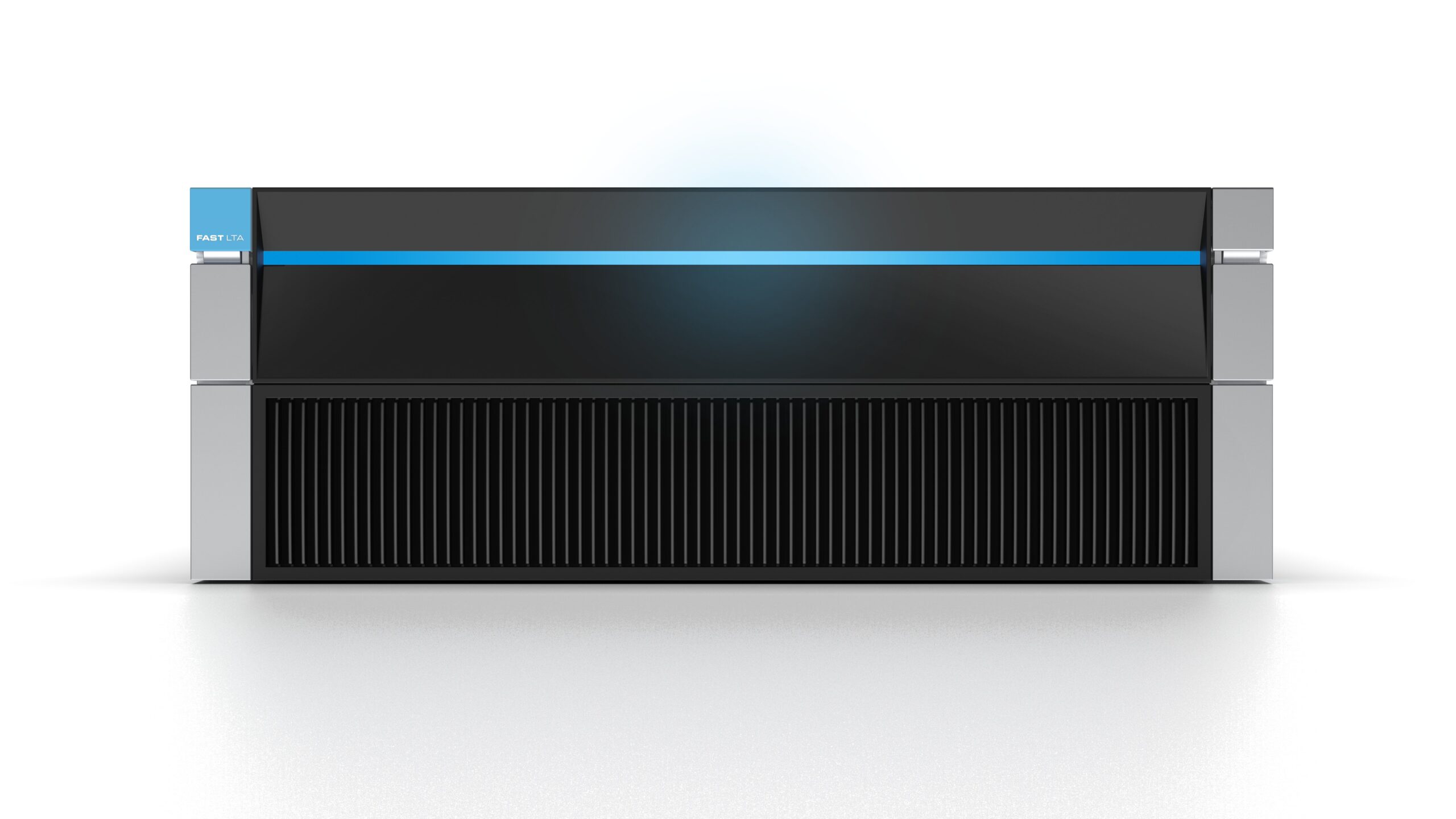
With Silent AI Pro, FAST LTA offers a solution for organizations that want to deploy AI locally without being dependent on external cloud models.
The solution makes it possible to run agentic AI workflows within the organization’s own infrastructure. Confidential data remains under the organization’s control and there are no variable costs per token.
Silent AI Pro can thus be part of a fully local AI environment as well as a hybrid AI architecture.
The choice remains dependent on the use case. By looking at data security, availability, flexibility, and costs per application, a well-founded AI strategy is created that aligns with the needs of the organization.
In the spotlight

Webinar “Agentic AI: under control and financially manageable“
AI agents do not just answer questions; they independently perform tasks using data from various corporate systems. This offers opportunities but also raises questions about security, control, and rapidly increasing token costs. During this session, we show how to deploy agentic AI entirely within your own infrastructure. Using a practical use case, we discuss data protection, access rights, and the integration with internal systems. Finally, we calculate live when a local AI appliance becomes more financially attractive than paying per user or token.
 Subscribe for tips and info