+31 (0)43 30 88 400 | office@comex.eu

Cloud and AI are becoming more expensive every year. How do you keep costs under control?

Cloud and software prices have risen by an average of 8.7 percent per year over the past three years. An annual increase of 12 percent is even expected for the next five years. AI is often used as an explanation for higher prices. This makes the choice for cloud AI not just a technical issue, but also a financial and strategic decision.
You can read more about these figures at Computable.
The cloud bill keeps growing
For years, the cloud offered organizations an attractive starting point. You could scale up quickly, didn’t have to invest directly in hardware, and paid based on usage.
That flexibility also has a downside. Organizations are increasingly faced with price increases, changing terms, and costs that increase as soon as usage grows.
European research by the French CIO association Cigref shows that cloud and software prices rose by an average of 8.7 percent per year over the past three years. For the next five years, the association expects an average annual increase of 12 percent.
With consumption remaining the same, this would cost European organizations an estimated 140 billion euros extra per year in five years’ time.
AI as an explanation for higher prices
Suppliers are increasingly referring to new AI functionalities when increasing prices. According to the study, this happens in about 40 percent of price increases.
This is not always offset by a demonstrable return. Almost 60 percent of respondents see the expected productivity gains from AI in the short and medium term as primarily theoretical.
That doesn’t mean AI offers no value. It does mean that organizations need to take a critical look at how they purchase and use AI.
Are you paying for applications that employees actually use? Can you predict how costs will develop? And what happens when the number of users, documents, or tasks grows?
From technical convenience to structural dependency
With many AI services, you pay per user, subscription, or amount of data processed. With generative AI, usage-dependent token costs are often added to that.
In the testing phase, these costs usually remain manageable. As soon as AI is deployed more broadly, the bill can quickly add up. A price change or adjustment to the licensing model is beyond your control.
The dependency goes further than costs. You are also dependent on the available models, terms of use, data processing, and the supplier’s choices.
The question is therefore not just which AI solution is cheapest or easiest today. You must also determine how much control you want to maintain in the long term.
When is local AI a logical alternative?
Not every AI application needs to run locally. Cloud AI remains suitable for applications where flexibility and fast access are more important than full control.
Local AI becomes more interesting when you work with sensitive data, predictable workloads, or business-critical processes. Think of searching through internal documents, summarizing files, or accessing information from Microsoft 365 environments.
With a local AI solution, data and models remain within your own infrastructure. You are not dependent on an external cloud service for every task and do not receive an increasing bill per processed token.
This is offset by an investment in your own infrastructure. The difference is that these costs are easier to plan upfront. Organizations can therefore make a trade-off based on the total costs over several years, instead of just looking at the low entry costs of a subscription.
Silent AI. Using AI without the cloud
Silent AI by FAST LTA is a local AI appliance for organizations that want to use AI while maintaining control over their data and infrastructure.
The solution runs within your own IT environment and can make information from business applications available for AI applications. Data does not need to be sent to an external AI provider for this.
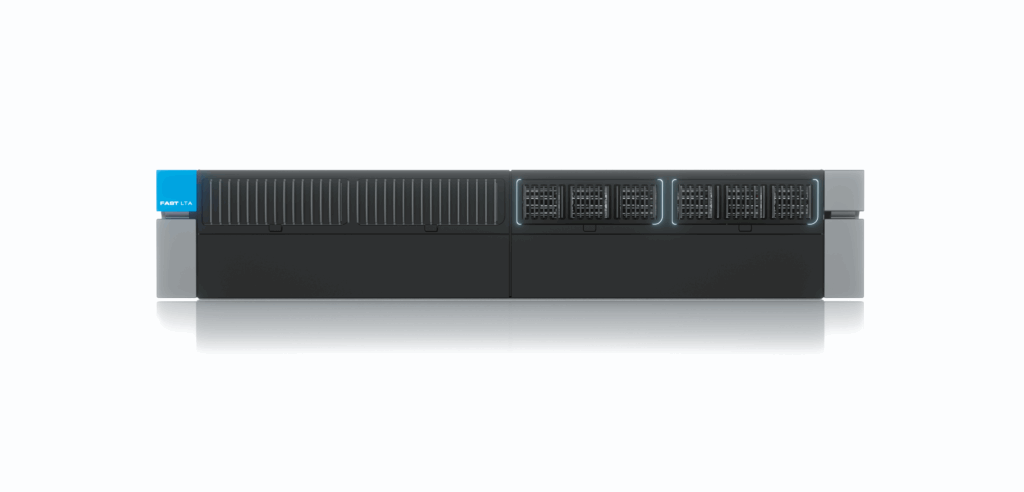
This offers three concrete advantages.
Data control
Company data remains within your own infrastructure. You decide where data is processed and who has access to it.
- Predictable costs
You invest in a local solution and are not dependent on token prices that continue to rise with more intensive use.
- Less dependency
You maintain more grip on the infrastructure, models, and terms behind your AI applications.
Cost control and digital sovereignty go hand in hand
Digital sovereignty is often reduced to the location of data. But financial and technological dependency also play a role.
If an external supplier can unilaterally adjust prices, terms, or functionalities, that directly impacts your organization. That risk increases as AI is integrated more deeply into daily processes.
The right approach is therefore not to replace all cloud and AI services. It’s about a conscious choice per application.
Which dependencies are acceptable? Which data do you not want to process externally? And for which applications does local AI offer more control and better predictable costs in the long term?
Do you want to explore whether local AI fits within your organization? Contact us for more information about Silent AI.
Source. Computable, “Cloud price tag rises by 9 percent every year”, September 4, 2026.
 Subscribe for tips and info