+31 (0)43 30 88 400 | office@comex.eu

AI compliance and sensitive corporate data

AI is increasingly used within organizations. Employees use AI for summaries, document analysis, knowledge queries, text suggestions, and supporting internal processes.
But as soon as AI is used with sensitive corporate data, a compliance issue arises. Which data may be used? Where is that data processed? Who has access? Is input stored? And does the use fit within security, privacy, and internal governance?
AI compliance is therefore not just about legislation. It is primarily about control over data, risks, access, and processing.
Why AI compliance starts with data
AI compliance begins with one simple question: what data are you using?
As long as AI is used for general tasks without sensitive information, the risks are often more manageable. Think of brainstorming, draft texts, or public knowledge queries.
That changes when employees use internal documents, customer information, contracts, files, financial data, technical documentation, or other sensitive corporate data.
Then it must be clear how data is processed, where data ends up, and who has access to input and output. Without that insight, AI quickly becomes a risk to privacy, security, and compliance.
What falls under sensitive corporate data?
Sensitive corporate data is information that you do not want to simply share or process outside the organization.
Think of:
- customer data
- patient data
- financial information
- contracts
- legal documents
- HR documents
- strategic plans
- intellectual property
- technical documentation
- research data
- support tickets
- internal procedures
- data from regulated processes
Not all sensitive data is automatically protected by law, but that does not mean the data can be used freely. Confidential business information, internal knowledge, and commercial data can also pose risks when they end up in public AI services.
Where does it go wrong with public AI services?
Public cloud AI is useful for fast and general applications. The barrier to entry is low, and employees can experience value immediately.
The risk arises when public AI services are used with information that does not belong there.
Common problems include:
- AI is increasingly used within organizations. Employees use AI for summaries, document analysis, knowledge queries, text suggestions, and supporting internal processes.
- documents are uploaded without a policy
- it is not clear where processing takes place
- input and output are not logged
- AI compliance is therefore not just about legislation. It is primarily about control over data, risks, access, and processing.
- AI use falls outside existing security processes
- Why AI compliance starts with data
- AI compliance starts with one simple question: what data are you using?
As long as AI is used for general tasks without sensitive information, the risks are often more manageable. Think of brainstorming, draft texts, or public knowledge queries.
That changes when employees use internal documents, customer information, contracts, files, financial data, technical documentation, or other sensitive corporate data.
Then it must be clear how data is processed, where data ends up, and who has access to input and output. Without that insight, AI quickly becomes a risk to privacy, security, and compliance.
Which AI tools are being used?
Map out which AI tools employees are using. Think of standalone online tools, integrated AI features in SaaS applications, APIs, and internal experiments.
Without an overview, you cannot properly assess risks.
What data goes in?
Determine what data ends up in AI tools. This is especially important for documents, customer data, files, contracts, and financial information.
Where is data processed?
You want to know whether data is processed locally, in Europe, in a private environment, or on a public cloud platform.
Who has access?
AI must not bypass existing authorizations. An employee must not be able to obtain information via AI that they would normally not have access to.
Is input stored or used for model improvement?
With sensitive corporate data, it must be clear what happens to prompts, uploads, context, and output.
Is the use demonstrable?
Logging is important for compliance, security, and audits. You want to be able to see which applications are being used and how risks are managed.
internal procedures
data from regulated processes
That is useful, but policy alone is not enough.
Where do things go wrong with public AI services?
That is why AI governance must be supported by technology. Think of access management, logging, secure storage, clear data classification, and an environment in which AI can be used with internal data without unnecessary risks.
Private AI as a more secure choice for sensitive corporate data
Private AI is particularly relevant when AI is used with internal documents, customer information, files, or other sensitive corporate data.
With private AI, the AI application runs within a shielded or controlled environment. This allows you to maintain more control over data, access, processing, and management.
Private AI does not mean that all risks automatically disappear. Policy, monitoring, permissions management, and documentation remain necessary. But the technical foundation aligns better with organizations that want to use AI without sending sensitive data to public AI platforms.
Off-cloud AI and local AI
Off-cloud AI means that AI processing does not take place in a public cloud environment, but within a controlled environment of the organization itself.
Local AI is a concrete form of this. The AI solution runs locally or within the own infrastructure, so that sensitive data remains more closely under own control.
This can be important for organizations with compliance requirements. Not only because of privacy, but also because of control over access rights, vendor lock-in, costs, and data processing.
Private LLM and RAG with permissions management
Many organizations want to use AI to find information faster in internal documents and knowledge sources. This is possible with a private LLM in combination with RAG.
RAG stands for Retrieval Augmented Generation. The AI first searches for relevant information in internal sources and uses that information to formulate an answer.
For AI compliance, it is especially important that permissions management continues to work. An employee should only receive answers based on information to which that person has access.
Without proper permissions management, AI can unintentionally make sensitive information visible to the wrong user.
AI compliance within NIS2 and DORA
AI compliance also touches on broader compliance frameworks such as NIS2 and DORA.
Within NIS2, it is about cyber resilience, risk management, and protection of critical processes. When AI is used with sensitive corporate data, AI use must therefore be part of security policy, access management, and incident response.
Within DORA, for financial organizations, it is about digital operational resilience and ICT risk management. AI applications that process sensitive data must therefore fit within governance, vendor management, continuity, and control of ICT risks.
AI is therefore not separate from existing compliance. It must become part of the same approach for data, security, and risks.
AI compliance and digital sovereignty
AI compliance directly touches on digital sovereignty. AI works with prompts, documents, context, output, and metadata. When this goes through public platforms, dependency on external technology, terms, and infrastructure arises.
With off-cloud AI and European storage, you maintain more control over where data is processed, who has access, and how dependent you are on external platforms.
This is important for organizations working with sensitive corporate data. AI must add value without losing control over data.
How Silent AI helps with AI compliance
Silent AI helps organizations use generative AI locally with their own data.
The solution runs within a controlled environment, works with internal documents and knowledge sources, and takes existing permissions management into account. This allows employees to use AI with corporate data without sending sensitive information to public AI services.
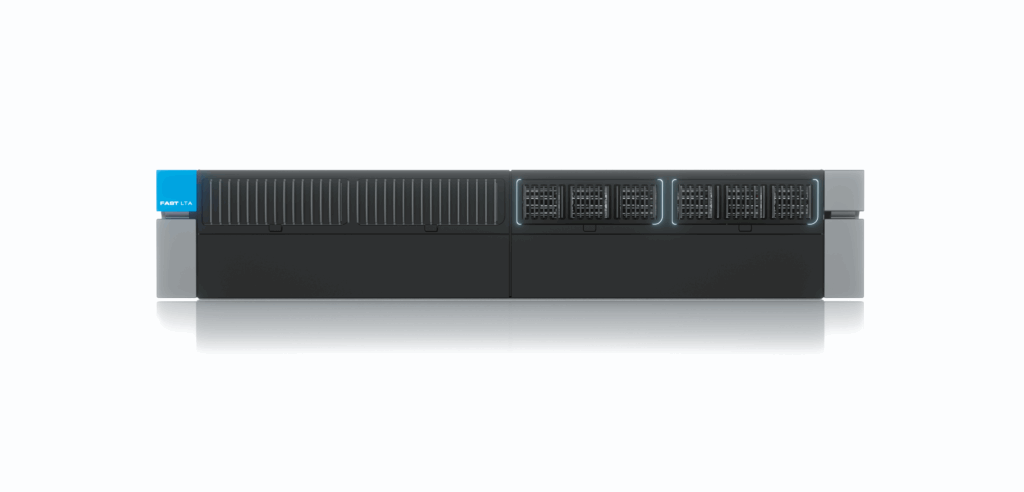
Silent AI combines local AI, private LLM, RAG, secure storage, and management in one appliance. This makes the solution suitable for organizations that want to deploy AI with more control over data, compliance, and digital sovereignty.
Practical checklist for AI compliance
Use these questions as a starting point:
- Which AI tools are being used within the organization?
- Which data may and may not be entered?
- Is sensitive corporate data being processed?
- Where does processing take place?
- Is input stored or used for model improvement?
- Who has access to documents, prompts, and output?
- Does existing permissions management remain leading?
- Are logging and monitoring in place?
- Have vendor risks been assessed?
- Does AI use fit within NIS2 compliance or DORA compliance?
- Is there an alternative to public AI services for sensitive data?
- Is AI part of broader digital sovereignty?
A good AI compliance approach combines policy, technology, and awareness. Policy alone is too vulnerable. Technology alone is too narrow.
Frequently asked questions about AI compliance and sensitive corporate data
What is AI compliance?
AI compliance means that AI applications are used within clear rules for data, privacy, security, governance, and risks. Organizations must know which AI is used, what data ends up in it, and how risks are managed.
Why is sensitive data a business risk with AI?
Sensitive corporate data can contain confidential, personal, financial, legal, or strategic information. When this data ends up in public AI services, risks can arise regarding privacy, compliance, access, and data control.
Is public cloud AI suitable for sensitive corporate data?
Public cloud AI can be suitable for general applications, but requires extra attention when sensitive corporate data is used. Organizations must then clearly understand where data is processed, who has access, and what happens to input and output.
How does private AI help with AI compliance?
Private AI helps organizations use AI within a controlled environment. This provides more control over data, access, processing, and governance than unmanaged use of public AI services.
What is the difference between private AI and off-cloud AI?
Private AI focuses on AI within a shielded environment. Off-cloud AI means that AI processing takes place outside public cloud environments. Both approaches help organizations keep sensitive data better under control.
How does local AI help with sensitive corporate data?
Local AI runs within the organization’s own environment. As a result, sensitive corporate data does not need to be sent unnecessarily to public AI platforms, and control over access and processing is better maintained.
How does AI compliance fit within NIS2 and DORA?
AI compliance touches on risk management, access management, vendor dependency, and incident response. This aligns AI compliance with broader themes within NIS2 and DORA, such as cyber resilience and digital operational resilience.
How does Silent AI help with AI compliance?
Silent AI helps organizations use generative AI locally with their own data. The solution combines local AI, private LLM, RAG, secure storage, and existing permissions management in one appliance.
Want to know more about AI compliance and off-cloud AI?
AI compliance starts with control over data. Especially when AI is used with sensitive corporate data, internal documents, or regulated information.
Read more about off-cloud AI or discover how Silent AI helps to use generative AI locally and securely.
 Subscribe for tips and info