+31 (0)43 30 88 400 | office@comex.eu
Private AI vs public cloud AI: what fits your data?

AI is increasingly used for texts, summaries, analyses, search queries, and supporting internal processes. Many organizations start with public AI services because they are quickly accessible and user-friendly.
But as soon as AI is used with internal documents, customer information, contracts, files, or other sensitive corporate data, different questions arise. Where is data processed? Is input stored? Who has access? And does this fit within compliance, security, and governance?
That is why more and more organizations are looking at private AI or off-cloud AI. Not as a replacement for all public AI tools, but as a more secure choice for applications involving sensitive data.
What is public cloud AI?
Public cloud AI is AI that runs on a public cloud environment from an external provider. Users utilize an AI model via an online platform, API, or application.
This type of AI is often quickly available, scalable, and easy to use. As a result, public cloud AI is suitable for general tasks such as brainstorming, rewriting, summarizing, or creating draft texts.
For many organizations, this is a logical first step. The barrier to entry is low, and employees can quickly experience where AI adds value.
Concerns mainly arise when employees use sensitive corporate data in public AI services.
What is private AI?
Private AI is AI used within a shielded and controlled environment. The organization maintains more grip on data, access, processing, and management.
Private AI can run locally, on-premise, in a private cloud, or as an appliance within the own infrastructure. The core is that sensitive data does not simply have to be sent to public AI platforms.
Private AI is often used in combination with private LLM, RAG, and existing permissions management. This allows employees to ask questions of internal documents, while access to information remains aligned with existing authorizations.
Private AI vs public cloud AI: the difference
Public cloud AI is particularly strong when speed, scalability, and ease of use are important.
Suitable for:
- general text tasks
- brainstorming
- summarizing non-sensitive information
- public knowledge queries
- quick experiments
- API applications without sensitive data
- creative support
Key points of attention:
- where is data processed?
- is input stored?
- who has access to data?
- how does permissions management work?
- are costs predictable?
- does it fit within AI compliance?
Private AI is particularly strong when control, data security, and compliance are important.
Suitable for:
- internal documents
- customer files
- contracts
- policy information
- legal documents
- technical documentation
- financial data
- healthcare data
- knowledge management
- AI for sensitive corporate data
Key benefits:
- data remains within a controlled environment
- existing permissions management remains leading
- more control over processing
- less dependence on public AI platforms
- better fit for governance and compliance
- suitable for off-cloud AI
The difference is therefore not just in technology. The difference is primarily in control. Public cloud AI is useful for general applications. Private AI is more logical when AI works with sensitive corporate data or internal knowledge sources.
When is public cloud AI suitable?
Public cloud AI is suitable when the data is not sensitive and speed is more important than full control over processing.
Think of:
- fleshing out ideas
- improving general texts
- summarizing public information
- creating marketing concepts
- drafting non-confidential documentation
- general programming support
- internal AI experiments without sensitive data
For these types of applications, public cloud AI can deliver a lot of value. Especially when organizations have clear guidelines on what employees may and may not input.
The risk arises when those boundaries are unclear. If employees input customer data, contracts, financial data, or confidential documents, public cloud AI becomes a governance issue.
When is private AI better suited?
Private AI is better suited when AI is used with data that you do not want to process outside the organization.
Think of:
- customer data
- patient data
- financial information
- legal documents
- contracts
- internal policy documents
- technical manuals
- research data
- support tickets
- project documentation
- intellectual property
In these situations, you want to maintain control over where data is located, who has access, and how answers are generated.
Private AI helps organizations apply AI to internal knowledge without unnecessarily sending sensitive information to public AI services.
The biggest risk: sensitive data in public AI tools
The biggest challenge with public cloud AI is not always the technology itself. The problem is often in usage.
Employees want to work quickly. They copy text, upload documents, or ask questions based on internal information. That can be useful, but also risky.
As soon as sensitive corporate data ends up in a public AI tool, it must be clear what happens to it. Is the input stored? Is it used for model improvement? Where does processing take place? And who can access it?
That is why organizations need policies, training, and technical measures. Simply saying that employees must be careful is often not enough.
Private LLM and RAG with internal documents
Many private AI solutions work with a private LLM and RAG.
A private LLM is a language model used within a controlled environment. The model can help with questions, summaries, searches, and text analysis.
RAG stands for Retrieval Augmented Generation. In this process, the AI first searches for relevant information in internal documents or knowledge sources. Then, the model uses that information to formulate an answer.
The advantage is that the AI can provide answers based on its own corporate data without all the information having to be retrained into the model.
For organizations, it is particularly important that permissions management continues to work. An employee should only receive information that they are authorized to access.
Private AI and AI compliance
AI compliance requires control over data, risks, access, and accountability. Organizations must be able to explain which AI applications are used, what data goes into them, and how risks are managed.
Private AI can help with this because the organization maintains more grip on processing, access management, and infrastructure.
That does not mean private AI is automatically compliant. Policies, logging, security, user rights, documentation, and management remain necessary. But private AI does make it easier to bring AI within existing governance.
For organizations in regulated sectors, that difference can be important.
Private AI and digital sovereignty
Private AI directly relates to digital sovereignty. AI often works with prompts, documents, context, output, and metadata. When this runs through public platforms, dependence on external technology, terms, and infrastructure arises.
With off-cloud AI, you maintain more control over where data is processed, who has access, and how dependent you are on external AI platforms.
This aligns with broader questions around European storage, data sovereignty, and cloud strategy. Especially when AI is used for sensitive corporate data or business-critical knowledge.
Private AI as part of a cloud exit strategy
A cloud exit strategy does not mean you take everything out of the cloud. It means you consciously determine which data, workloads, and applications stay in the cloud, and which fit better locally, hybrid, or on European infrastructure.
AI is increasingly part of that consideration. For general tasks, public cloud AI can work fine. For sensitive corporate data, private AI may be more logical.
This makes AI part of your broader cloud strategy. Not out of fear of the cloud, but out of control over data, costs, dependence, and compliance.
How Silent AI helps with private AI
Silent AI was developed for organizations that want to use generative AI with their own data, without sending sensitive information to public AI services.
The solution runs locally, works with internal documents and knowledge sources, and takes existing permissions management into account. Employees can ask questions of their own data, while information remains within a controlled environment.
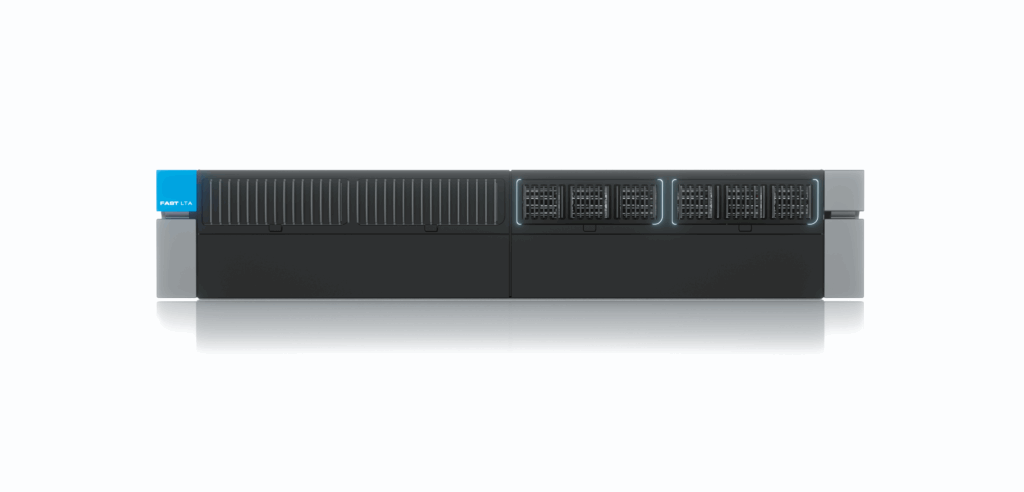
Silent AI combines local AI, private LLM, RAG, secure storage, and management in one appliance. This makes the solution suitable for organizations that want to use AI for sensitive corporate data, compliance, and digital sovereignty.
Private AI or public cloud AI: how do you make the choice?
The choice between private AI and public cloud AI does not have to be an all-or-nothing choice. Often, a combination is most logical.
Use public cloud AI for general tasks without sensitive data. Use private AI for applications with internal documents, customer information, compliance-sensitive data, or business-critical knowledge.
Ask these questions for every AI application:
- what data is being used?
- is that data sensitive?
- where is data processed?
- who has access?
- must existing permissions management remain in effect?
- are costs predictable?
- does the application fit within compliance requirements?
- is the organization dependent on a single external platform?
With these questions, you prevent AI from remaining a separate experiment. You make AI part of your data and security strategy.
Frequently asked questions about DORA and data storage
What is the difference between private and public cloud AI?
Public cloud AI runs on public cloud platforms from external providers. Private AI runs within a shielded or controlled environment. The biggest difference lies in control over data, access, processing, and compliance.
Is private AI always better than public AI?
No. Public cloud AI is often suitable for general tasks and quick experiments. Private AI is particularly important when AI is used with sensitive corporate data, internal documents, or regulated information.
When do you use private AI?
Private AI is suitable when you want to use AI with data that should not simply be sent to public AI services. Think of customer data, contracts, files, technical documentation, financial information, or internal knowledge sources.
What is a private LLM?
A private LLM is a language model used within a controlled environment. It helps organizations apply AI to their own data without sending sensitive information to public AI platforms.
How does private AI help with AI compliance?
Private AI helps organizations maintain more control over data, access, and processing. This makes it easier to bring AI within existing governance, security, and compliance processes.
What is the relationship between private AI and off-cloud AI?
Off-cloud AI means that AI processing takes place outside of public cloud environments. Private AI is a way to set that up. Both terms revolve around control over sensitive data and limiting public cloud dependency.
How does Silent AI help with private AI?
Silent AI helps organizations use generative AI locally with their own data. The solution combines local AI, private LLM, RAG, secure storage, and existing permissions management in one appliance.
Want to know more about private AI and off-cloud AI?
Private AI and public cloud AI both have their place. The most important question is what data you use and how much control you need.
Do you want to deploy AI with internal documents, sensitive corporate data, or compliance-sensitive information? Then read more about off-cloud AI or discover how Silent AI helps to use generative AI locally and securely.
 Subscribe for tips and info