+31 (0)43 30 88 400 | office@comex.eu
Cloud exit strategy: maintain control over data and costs
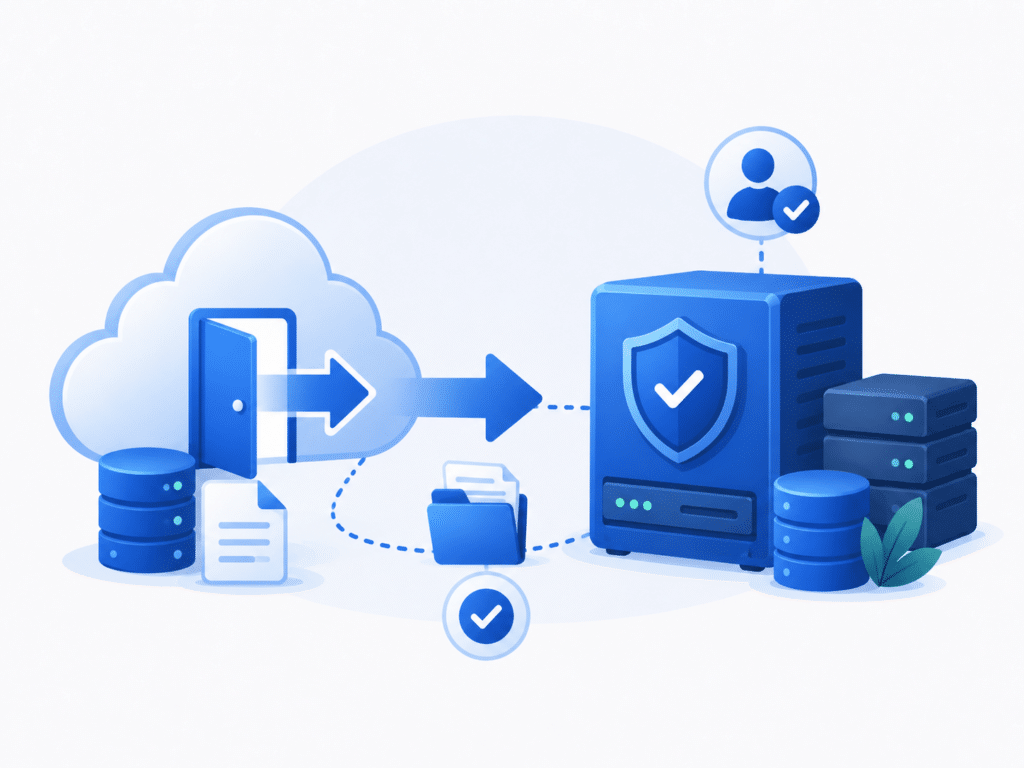
A cloud exit strategy helps organizations consciously determine which data, applications, and workloads remain in the cloud, and which are better placed locally, hybrid, or on European storage.
The goal is not to remove everything from the cloud. The goal is control. Control over where data is located, who can access it, what costs arise, and how dependent you are on a single cloud platform or vendor.
For organizations with growing data, compliance requirements, backup environments, archives, or AI applications, this control is becoming increasingly important.
What is a cloud exit strategy?
A cloud exit strategy is a plan to be able to move data, applications, or workloads out of a cloud environment when necessary.
This can involve full migration from the cloud, but more often it involves a targeted choice. Some data remains in the cloud. Other data is moved to local storage, European storage, archive storage, or a hybrid environment.
A good cloud exit strategy prevents you from being locked into a single vendor, unpredictable costs, or limitations regarding access, compliance, and recoverability.
The goal is that sensitive business data does not have to be sent to external AI platforms. As a result, organizations maintain more control over where data is located, who has access, and how AI is used.
Off-cloud AI is often linked to terms such as private AI, sovereign AI, on-premise AI, AI appliance, and private LLM.
Why organizations consider a cloud exit
Cloud storage and cloud platforms offer speed and flexibility. Yet more and more organizations are finding that not every dataset is suitable for public cloud environments.
The main reasons for creating a cloud exit strategy are:
- rising cloud costs
- unclear costs due to data traffic, API calls, or storage growth
- vendor lock-in
- compliance requirements regarding data and jurisdiction
- desire for digital sovereignty
- need for local backup and recovery
- large amounts of archive data or cold data
- Off-cloud AI applications with sensitive business data
Cloud exit does not mean that cloud is wrong. It means re-evaluating which data belongs where.
Cloud exit and digital sovereignty
Cloud exit strategy and digital sovereignty are strongly linked. Digital sovereignty is about control over data, infrastructure, access, jurisdiction, and vendor dependency.
When critical data is fully dependent on a single cloud platform, that control diminishes. You are dependent on that vendor’s pricing models, terms, availability, support, and legal frameworks.
With a cloud exit strategy, you determine which data must remain under your own control. Think of backups, archives, sensitive business data, datasets for AI, and data with long retention periods.
Data sovereignty: where is your data and who can access it?
Data sovereignty is more specifically about the data itself. Where is the data located? Who has access? Which legislation applies to the storage? And can you demonstrate that data remains secure, available, and controllable?
For many organizations, this is important for:
- healthcare data
- financial data
- government information
- research data
- intellectual property
- archive data
- backups
- AI data sources
A cloud exit plan helps to re-evaluate this data. Not everything has to leave the cloud. But data with high risks or long retention periods deserves a conscious storage choice.
Hybrid: not everything has to leave the cloud
What stays in the cloud?
Cloud remains suitable for workloads where scalability, flexibility, and rapid deployment are important.
Examples:
- active applications
- temporary workloads
- collaboration environments
- SaaS applications
- test and development environments
- services with low compliance risks
What do you keep outside the public cloud?
Some data is better suited for local, hybrid, or European storage. Especially when control, costs, recoverability, or long retention periods are important.
Examples:
- backups
- archive data
- cold data
- recovery data
- sensitive business data
- sensitive AI data sources
- data with mandatory retention
- data that must remain under European control
A strong cloud exit strategy is therefore not an all-or-nothing choice. It is a conscious distribution of data across the right storage tiers.
European storage as a basis for cloud exit
European storage helps organizations maintain more control over data, infrastructure, service, and support.
It’s not just about where data is located. Design, development, supply chain, management, and support also play a role. It is precisely this combination that determines how much control you have over critical data in the long term.
For backup, archive, cold data, and local AI, European storage can be a strong foundation within a cloud exit strategy.
Cloud exit for backup and recovery
Backups are a key part of cloud exit. Many organizations store backups in the cloud, but later face growing volumes, restore costs, or dependency on a single platform.
For critical backups, recoverability is more important than storage convenience. You need to know where backups are located, who has access, how they are protected, and how quickly recovery is possible.
Silent Bricks can help as secure storage for backup, recovery, VTL, air gap, and Veeam environments. This allows you to keep recovery data under better control.
Cloud exit for compliant archiving
Archive data often remains for years. When that data continues to grow in public cloud environments, costs and dependency can escalate.
In compliant archiving, it’s about retention periods, integrity, findability, and protection against modification or deletion.
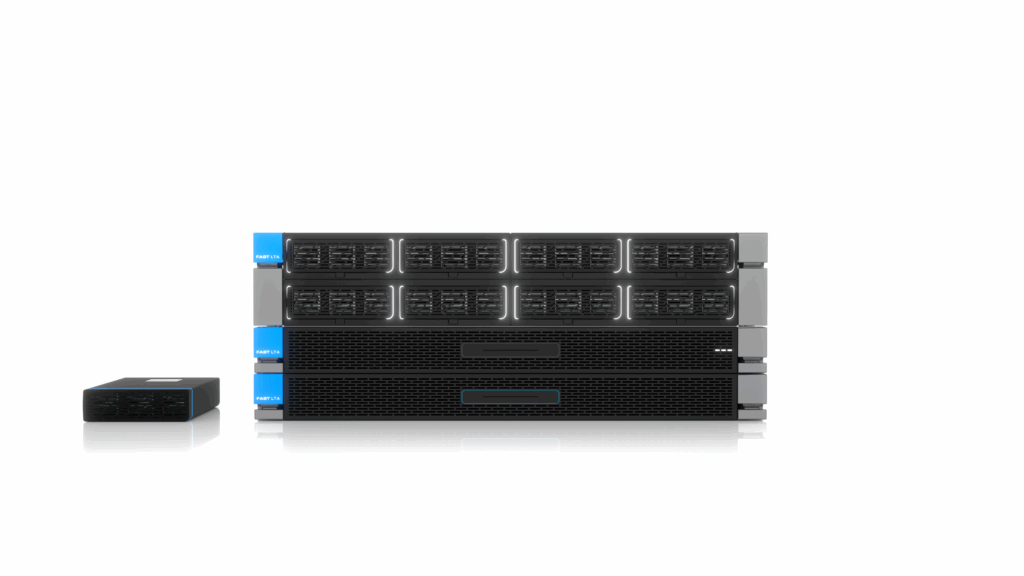
Silent Cubes help organizations store archive data for the long term in a controllable and demonstrably unchangeable way with hardware WORM storage. This fits well with a cloud exit strategy for archive data and cold data.

Cloud exit for AI and sensitive business data
AI makes cloud dependency more visible. Generative AI often works with documents, knowledge bases, prompts, and sensitive business information.
When that data is sent to public AI services, questions arise regarding privacy, compliance, rights management, and data control.
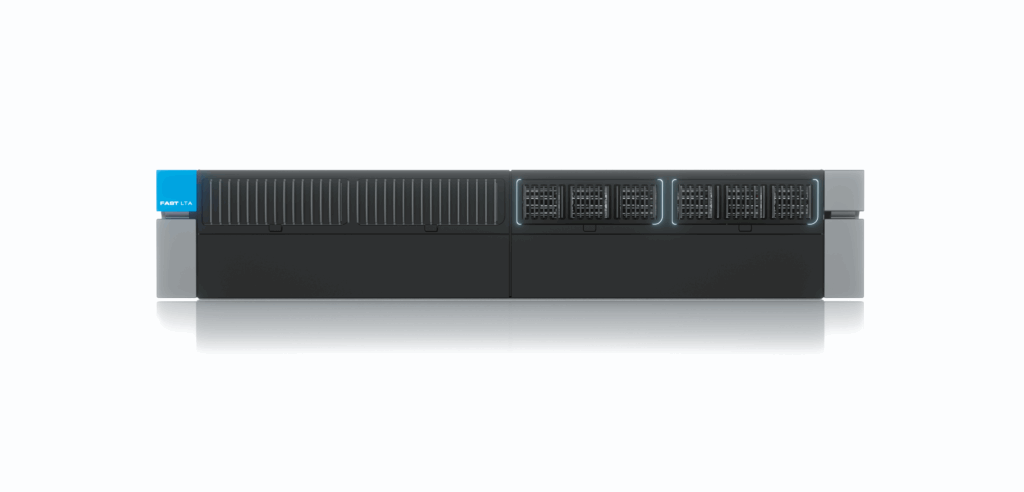
Silent AI helps organizations use generative AI locally with their own data. This keeps sensitive information within the own environment and maintains control over access, processing, and costs.
When do you need a cloud exit strategy?
A cloud exit strategy is relevant when:
- cloud costs continue to rise
- data grows faster than expected
- you are dependent on a single cloud platform
- compliance requirements become stricter
- you want to keep data under European control
- backups or archives in the cloud become too expensive
- restore processes are not clear
- AI applications use sensitive data
- your organization wants more digital sovereignty
A cloud exit strategy provides direction before costs, risks, or dependency become too great.
Frequently asked questions about cloud exit strategy
What is a cloud exit strategy?
A cloud exit strategy is a plan to be able to move data, applications, or workloads out of a cloud environment when necessary. The goal is more control over costs, data, compliance, and vendor dependency.
Does cloud exit mean everything has to leave the cloud?
No. Cloud exit does not mean everything has to leave the cloud. It means you consciously determine which data remains in the cloud and which data is better placed locally, hybrid, or on European storage.
Why is cloud exit important for digital sovereignty?
Cloud exit helps organizations maintain more control over where data is located, who has access, and under what conditions data is stored. This way, a cloud exit strategy supports broader digital sovereignty.
What is the difference between cloud exit and data repatriation?
Cloud exit is the strategy to limit cloud dependency or to be able to move data. Data repatriation is the actual movement of data from the cloud to local, hybrid, or other storage.
Which data is suitable for cloud exit?
Backups, archive data, cold data, recovery data, and sensitive business data are particularly suitable for re-evaluation. This data often grows quickly, is not always used daily, and can place high demands on costs, compliance, and control.
How does European storage help with a cloud exit?
European storage helps organizations keep data under better control. Not just through storage location, but also through European design, development, supply chain, service, and support. This limits dependency on non-European cloud or technology platforms.
How do Silent Bricks, Silent Cubes, and Silent AI help with cloud exit?
Silent Bricks help with backup, recovery, VTL, and air gap storage. Silent Cubes help with compliant archiving with hardware WORM storage. Silent AI helps with local AI using own data. Together, these solutions support a cloud exit strategy for data that does not need to remain dependent on public cloud platforms.
How do you start with a cloud exit strategy?
Start with data classification. Map out which data is in the cloud, what that data costs, what risks are involved, and which data can be better stored locally, hybrid, or European.
Discuss your cloud exit strategy
Do you want to know which data is better off staying in the cloud and which data should be under your own control?
Schedule a meeting with one of our experts. We will look at cloud costs, backup, archive, cold data, local AI, digital sovereignty, and European storage.
 Subscribe for tips and info